Showing posts with label Design. Show all posts

Wednesday, July 09, 2014

Experimenting


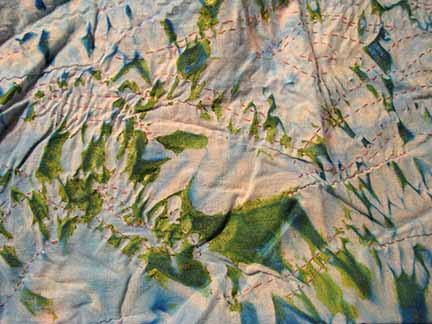
Stenciling on natural dyed (tea and coffee) fabric using my Black Birds in Tree stencil from StencilGirl Products!!!


I'm using purple and yellow acrylic paints and a stencil brush.


This while waiting for the screen printing supplies to arrive.  The bulb in my thermofax machine died and is no longer available, so on the advice of some trusted artist friends I've purchased Jacquards drawing fluid and filler to make silk screen designs.  The upside to this is I'll have large screens for screen printing natural dyes onto the cloth.

Tuesday, April 08, 2014

Pigment Painted Fabric


Panel One


Panel Two


Panel Three

Earth pigments on silk crepe de chine fabric.  Now to get them ready for stitching!

Wednesday, January 29, 2014

Introductory Sale Mark Making with Nature Ends January 31st!!!


Introductory Price 
(Ends January 31st)

Mark Making with Nature Video Series
Own $39.95 or Rent $19.95 

Click here to learn more!!!

Tired of your fabric looking like everyone else's?  In this video series I will teach you how to push the limits using natural dyes and traditional surface design techniques!

Tuesday, January 29, 2013

In the Mean Time


Cotton fabric dyed with procion dyes and surfaced with fabric inks, created well over 12 years ago.


Monday, January 14, 2013

The Natural Surface Network - Changes!!!

BIG CHANGES are coming to The Natural Surface starting February 14th, if your a member check out the discussion in the forum!


I’m setting the membership price at $29.95 for one year. This is well below the price of a high quality natural dyeing book.  .

Current perks to a paid membership would be:

·        Your own personal page and profile

·        Access to the Forums

·        Access to the Open Groups this does not include Paid Access eClass Groups

·        Access it the Library.

·        Access to the Critique Group!

Future perks to a paid membership will be:

·        Your own personal page and profile

·        Access to the Forums

·        Access to the Open Groups this does not include Paid Access eClass Groups

·        Access to my DVD’s and Videos – coming this spring

·        Access to my podcasts – coming this spring

·        Access to my zines

·       Access it the Library.

·        Access to the Critique Group!

·        Coaching


Wednesday, July 11, 2012

Washed!


Washed and dried and as soft as can be!


There was very little wash out of the pigment, proving that the longer the cure time the better.
Front view.


Back view.

Tuesday, July 10, 2012

More Holes


More holes, cannot wait for these peices to come out of the washer to see what they look like!

Saturday, March 03, 2012

Mark Making with Nature eBook Package Sale

Mark Making with Nature eBook Package
Regular Retail Price for the four book set is $40.00
Now $25.00
through midnight March 5th!!!

Thursday, September 08, 2011

Tuesday, March 30, 2010

Spring is here!

Spring is here and now is the time to start digging out those old dye vats from last fall that have been hibernating in the basement. First up for this Springs Dye-In will be an Indigo Fermentation Vat. If you've never tried an indigo vat before now is a great time to do so! I'll be posting how to instructions along with video and more.
If you haven't checked out the Natural Surfaces Forum please do so http://naturaldyeing.ning.com/ We've been gaining members daily and natural dyeing discussions are picking up speed again now that the warmer temps have arrived

Tuesday, February 02, 2010

Mark Making with Nature DVD - Now in Stock!!!

Mark Making with Nature DVD - Now back in Stock!
http://www.etsy.com/shop/prairiefibers
By Surface Designer Kimberly Baxter Packwood
Over 2 hours of Video Instruction (5 Discs) & 53 Pages of Supplemental Instruction Included(PDF)
Everything you ever wanted to know to create unique cloth using natural dyes is covered in thisDVD Set, an excellent companion to the Compost Dyeing and Other Fermentation Technqiues Book.

Topics Covered Include:
  • Compost Dyeing: Several methods of compost dyeing are demonstrated.
  • Screen Printing with natural dyes, using thickeners and more.
  • Bound Resists with natural dyes how to obtain rich layers of color on fabric. Monoprinting & Stamping with natural dyes.
  • Create additional depth and design to your fabrics by stamping and printing them using natural dyes and pigments.
  • Dye Painting with natural dyes using thickeners, gutta resists, and much much more. Pigments: using pigments with natural dyes to create additional character to your art cloth.
  • Included is a 51 PDF booklet (this booklet is on a CDROM which you can then print out) that includes additional images and details on how to obtain gorgeous art cloth using natural dyes.

Tuesday, July 08, 2008

Rust Dyeing Q & A

Rust Dyeing Questions and Answers by Kimberly Baxter Packwood © 2001

Q. Can I use salt water instead of vinegar to oxidize the metal?
A. Yes. Vinegar causes metal to oxidize faster than salt water.

Q. What is the fastest way to rust fabric?
A. I place my vinegar wetted fabric into a plastic bag with rusty objects, I then place them in a sunny location that is warm. I will have adequate rust on my fabric in about 24 hours, depending on the level of rust I am seeking.

Q. Will the fabric rust through?
A. It depends on how far you allow the rusting process to proceed. You can rust the fabric to the point that the fabric will develop holes. If you do not want holes immediately then you need to stop the rusting process and neutralize the fabrics.

Q. I rusted my fabric, but I want more rust on the fabric, can I rust my fabric again?
A. Yes. I would neutralize and rinse the fabrics before proceeding with any further rusting applications.

Q. Can I over dye the rusted fabric?
A. Yes. If you are using natural dyes the iron from the rust can act as a mordant, saddening the natural dye colors. An example would be khaki from Osage Orange which gives golden to brassy yellows.

Q. How do I stop the rusting process?
A. You will need to neutralize your fabric with salt water or even soda ash to raise the pH of the fabric. Periodically, at least once a year, you will have to neutralize your fabrics as once the rust has bonded with the fibers it will continue to rust indefinitely.

Q. Is rusted fabric archival?
A. No! You can promote the longevity of your piece by periodically neutralizing the fabrics. However, neutralizing the fabric will not create an archival fabric.

Q. I Rusted my fabric for a quilting project but my needle will not go through the fabric, what am I doing wrong?
A. Try the rusting techniques on a loser weave fabric. The rust, when oxidizing, is to some extent, creating a layer of metal oxide onto the fabric. If your fabric has a tight dense weave this layer of metal oxide is denser as well, making it difficult to needle.

NOTE: If the metal oxide is thick, and chunky, on the fabrics surface I would not recommend using your sewing machine as the oxide particles can cause problems with your machine.

Rust Dyeing an Introduction

Rust Dyeing by Kimberly Baxter Packwood © 2001

`````*````*`````*`````*`````*`````*`````*`````*`````*`````*`````*`````*`````*`````*
AUTHORS NOTE: I wrote this awhile back, it was published in Turkey Red Journal - a well respected professional juried by your peers type journal (sometime around 2002). NOTE that these instructions from my self published book and this previously published article, and my artwork, were then published in Cloth Paper Scissors in 2007, I was NOT given credit for my work or my words. - Kimberly

`````*`````*`````*`````*`````*`````*`````*`````*`````*`````*`````*`````*`````*`````*

Rust dyeing is a surface design method that adds dimension to your fabrics and fibers. I use the technique predominately on cotton or silk fabrics. Natural fibers take the rust colors better than synthetic fibers.

You can rust dye onto commercially dyed and/or printed fabrics. However, fabrics dyed using synthetic dyes, or those dyed with natural dyes take rust dyeing best as they usually do not have anti-stain coatings on them.

When applying rusty objects to naturally dyed fabrics the colors will change. Iron, i.e. rust, is a modifier and is used as a mordant with natural dyes. Modifiers change the existing color via shifts in the pH levels. An example would be hibiscus or cochineal, each yield a red color, when you add iron they shift from red to purple. A minute amount causes this color change.

You can place rusty objects next to wet fabric and acquire rust patterning over time. However, vinegar will speed up the rusting process, it aids in breaking the rust particles free from the object that is rusting. Rusting occurs normally due to oxidation, i.e. contact with the air. Be patient. Rust dyeing with water takes about a week. Using vinegar produces color in less time usually twenty-four hours.

I use straight vinegar and all sorts of rusty objects to acquire my rust dyed patterns. Old nails and wire work well for this technique. Wire can be used for bound resist techniques, especially when wrapping the fabric around a rusty pipe. Or you can simply lay the wire in a loose pattern on the fabric and rust it in that manner.

Pole wrapping and bound resist techniques work well with rust dyeing. Simply wrap your vinegar-saturated fabric around a rusty pole, being careful not to tear the fabric, scrunch and otherwise manipulate the fabric to created patterning.

You can sprinkle iron mordant or iron shavings onto your fabric for other patterning. Iron mordant is preferable to shavings. Shavings are often sharp things that can cut you or the fabric. Metal shavings may be coated in machinery oil which would put unwanted stains onto the fabric.

If you like your rusty pieces and want to push the rust dyeing technique further, rinse the fabric and neutralize it in salt water (correction 2008 use baking soda water instead of salt water), rinse it again and then rust the fabric once more. This will help prevent the fabric from rotting through.

Natural rust is an iron oxide. It comes in about ten or more natural colors depending on what it is in the neighboring the iron ore. Wear gloves and a mask when working with it. Iron in this form wants to bind with your hemoglobin blocking all available sites for oxygen, ask me how I know. You can become gravely ill from too much contact with raw iron products. In addition, tolerance to raw iron varies with each person.

You can mix a small amount natural rust with water, I generally use one teaspoon rust to one cup liquid, or with soy milk to paint fabric. Stir well. Let it sit for 24 hours to ensure that all of the color will dissolve. Then apply the rust solution to the fabric. Use a old brush you can dedicate to this kind of project. Natural bristle brushes work best with this technique allowing the liquid to wick up the bristles and not leave a mess on your fabric. Cure the fabric dry for 24 hours. Rinse and neutralize your fabric in a saltwater solution.

When using the rust technique if you want the process to stop you need to neutralize it with a salt-water solution. Dissolve about 1/4 cup salt into four gallons of hot water. I do this in a five-gallon bucket. Soak your fabric in the salt water about fifteen minutes. Wash the fabric using a non-phosphorous soap or a mild color free shampoo.

I teach workshops on rust dyeing, several workshops on natural dyeing and several for clay/pigment dyeing

- Kimberly